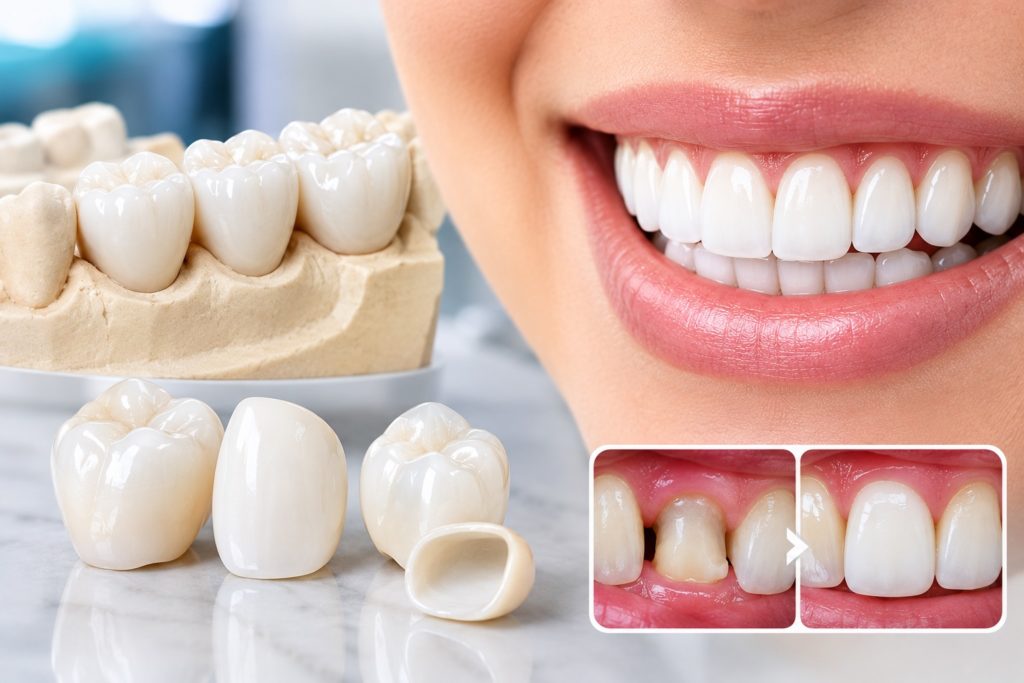
Are Modern Zirconia Crowns More Natural-Looking Than Older Designs?
Need a crown? Then you may have heard that zirconia is strong, and then heard someone say it looks “too white” or “opaque.” That reputation comes from early versions of the material, and it is not always fair to what is available today.
22 October 2026
Table of Contents
So are modern zirconia crowns more natural-looking than older designs? In many cases, yes. But appearance depends on more than the material name.
What Is Zirconia?
Zirconia (zirconium dioxide) is a ceramic known for its strength and resistance to fracture. In dentistry, it is used for crowns, bridges, and implant restorations. Because it is tough, it suits back teeth and patients who clench or grind, where other ceramics might chip.
What Older Zirconia Crowns Looked Like
Early zirconia was chosen for performance rather than beauty. Common drawbacks included:
- High opacity: The material blocked light, so the crown could look flat or chalky next to natural teeth, which are slightly translucent
- A uniform colour: One block shade gave little of the subtle variation seen in real enamel and dentine
- A bulky, “white cap” look: Particularly visible in the front of the mouth
- Veneering porcelain on top: To improve the look, technicians layered porcelain over a zirconia core. This looked better but could chip, which was a known weakness
For this reason, many dentists reserved zirconia for back teeth and used other materials where appearance mattered most.
What Has Improved in Modern Zirconia
Higher translucency formulations
Manufacturers have developed zirconia with different crystal structures and compositions that let more light pass through. These are often marketed as high-translucency or multilayer zirconia. Greater translucency helps a crown blend with the surrounding teeth.
Multilayer blocks
Some modern blocks shade gradually from a deeper colour near the gumline to a lighter, more translucent edge, mimicking how natural teeth vary in colour. This can give a more lifelike result without extra layering by hand.
Better colouring and staining
Technicians can add surface stains and glazes to reproduce fine details, such as subtle lines, edge translucency, and warmth.
Monolithic (full-contour) crowns
Instead of a zirconia core with porcelain on top, a monolithic crown is made from a single material. This reduces the risk of porcelain chipping and has become common, particularly for back teeth.
Digital design and milling
CAD software shapes the crown to match the tooth’s contours, contact points, and bite. Good design contributes to a natural look because shape and surface texture affect how light reflects.
What Affects How Natural a Crown Looks
The material is only one factor. The final appearance also depends on:
- Shade matching: Choosing the right base colour, ideally in good lighting, and sometimes with the help of photos or a laboratory technician
- Shape and surface texture: Natural teeth have subtle ridges and curves that influence how light reflects
- Translucency at the edges: Front teeth are usually more translucent near the biting edge
- The tooth underneath: A dark or discoloured prepared tooth can show through, especially with thinner or more translucent materials
- Thickness: Space is needed for the material to achieve both strength and appearance
- Gum shape and health: A crown looks natural only if the gum around it is healthy and well-shaped
- Surface finish: A well-polished or glazed surface mimics enamel better than a rough one
- The skill of the dentist and technician: Often the biggest factor of all
Two crowns made from the same zirconia block can look very different depending on how they are designed, finished, and fitted.
When Zirconia Is a Good Choice
- Back teeth that take heavy chewing forces
- Patients who grind or clench
- Crowns on dental implants
- Bridges, where strength is important
- Situations needing a thinner crown, since zirconia can be strong with less thickness
- Cases where a metal-free restoration is wanted
Modern zirconia crowns are often more natural-looking than the early versions, thanks to better translucency, multilayer shading, improved staining, and precise digital design. They combine strength with a much more lifelike appearance, which makes them a popular choice for many patients.
Still, the best crown is not about the material name alone. Tooth position, bite, shade matching, and the skill of your dental team decide how natural it looks and how long it lasts. For some visible front teeth, another material may be the better option.
If you need a crown, ask your dentist to explain the choices and why they suit your tooth. To discuss your options, book a consultation with our team. We will explain your treatment plan in plain language and help you choose a crown that looks natural and performs well.
