Too White, Too Bulky? Why More People Are Replacing Old Veneers
Veneers can transform a smile. But what happens when the smile you chose a few years ago no longer feels like you?
13 November 2026
Table of Contents
Many people now look in the mirror and see veneers that seem too white, too thick or simply out of date. Others notice chips, dark edges or gums that have changed around their veneers. Coverage in 2026, including a Marie Claire feature on veneer regret, describes a clear shift: people are moving away from bright, bulky “Hollywood” smiles towards softer, more natural-looking results.
If you’re thinking about veneer replacement in Sydney, this guide explains why veneer styles are changing, signs your veneers may need replacing, what’s involved and how to make a confident, well-informed decision.
Why Veneer Styles Are Changing
For years, many people asked for the whitest, most uniform smile possible. Social media filters, celebrity smiles and before-and-after posts made bright, perfectly even teeth look like the ideal.
Tastes are now changing. More patients are asking for smiles that:
- Look natural in everyday light, not just in photos
- Suit their face, age and skin tone
- Have subtle variation in shape, shade and translucency, like real teeth
- Feel comfortable and don’t look thick or bulky
There’s also greater awareness that veneers are a long-term commitment. Patients are increasingly asking about conservative treatment, careful planning and choosing a look that will still feel right in ten years’ time.
Signs Your Veneers May Need Replacing
Porcelain veneers are durable and often last many years with good care, but they aren’t designed to last forever.
Chips, Cracks or Breakage
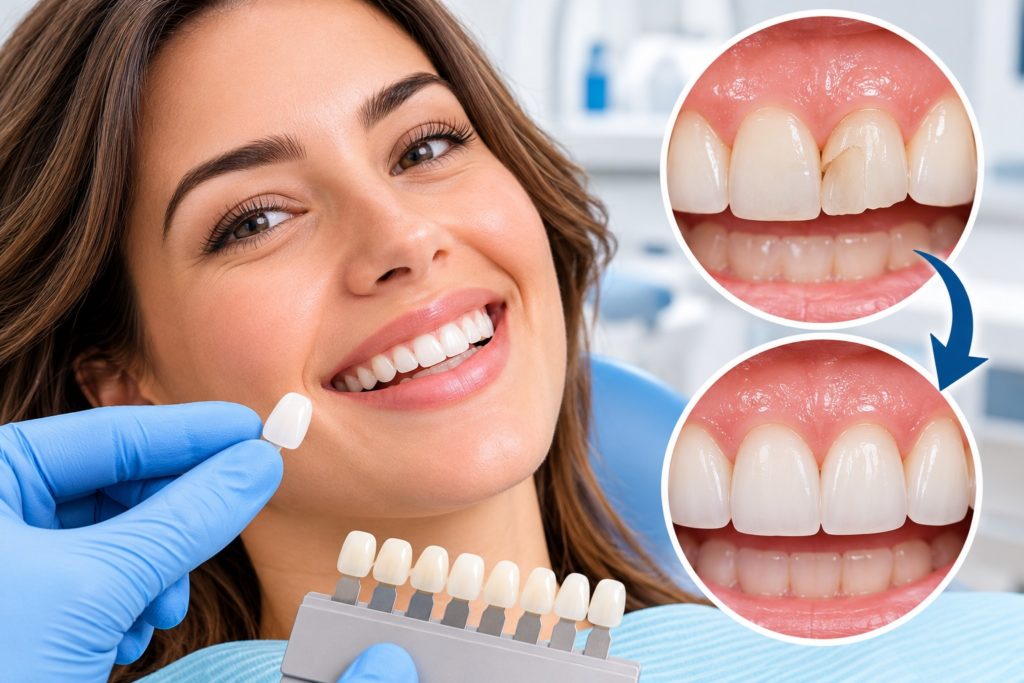
Porcelain is strong, but it can chip or crack from biting hard foods, grinding or an accident. Small chips can sometimes be repaired, but larger damage may mean the veneer needs replacing.
Staining at the Edges
Porcelain itself resists stains well, but the bonding material along the edges of a veneer can darken over time. This may show up as a thin brown or grey line where the veneer meets the tooth.
Gum Changes
Gums can recede with age, brushing habits or gum disease. This may expose the edge of a veneer or part of the natural tooth, creating a visible line or colour difference.
Veneers That Look Too White or Mismatched
If your natural teeth have changed colour, or your veneers were made in a very bright shade, they may now stand out more than you’d like.
A Bulky or Dated Look
Older or overbuilt veneers can make teeth appear thick, long or overly uniform. Some people also notice changes in how their lips sit or how they speak.
Decay or Sensitivity
Ongoing sensitivity, discomfort or a rough edge should always be checked.
Changes to Your Bite
Grinding, clenching or changes to your bite can put extra stress on veneers and affect how they fit.
What “Natural-Looking” Veneers Really Means
A natural-looking smile isn’t just about choosing a less white shade. It comes with careful design that suits your face and features.
Elements of a natural result include:
- Shade: a colour that suits your skin tone, eyes and remaining natural teeth
- Translucency: natural teeth let light through, especially at the edges, and well-made porcelain can mimic this
- Surface texture: subtle texture reflects light more like real enamel
- Shape and proportion: teeth designed to suit your face, lips and smile line
- Subtle variation: slight differences between teeth, rather than identical, perfectly uniform shapes
- Healthy gums: a natural-looking gum line that frames the teeth
Many patients find it helpful to see a trial smile or mock-up before committing, so they can discuss shape, length and shade with their dentist.
How to Avoid Regret: Q&A Before Treatment
Whether you’re replacing veneers or getting them for the first time, asking the right questions can help you make a confident decision:
- Do I actually need new veneers, or are there other options?
- What material will be used, and why is it suitable for me?
- Can I see a trial smile or mock-up first?
- How will the shade be chosen to suit my face and natural teeth?
- What are the possible risks and limitations?
- What happens if a veneer chips or breaks in the future?
- What does the total treatment cost include?
Take your time. A good dentist will answer your questions clearly and never pressure you into a decision.
Thinking About Veneer Replacement in Sydney?
If your veneers look too white, too bulky, damaged or dated, you’re not alone, and you may have more options than you think. A careful assessment can help you understand whether repair, replacement or another approach is right for you, and how to achieve a smile that looks and feels natural.
At Porcelain Veneers Sydney, we take the time to understand your concerns, explain your options honestly and plan treatment around your goals. If you’re considering veneer replacement in Sydney, discuss your smile.
